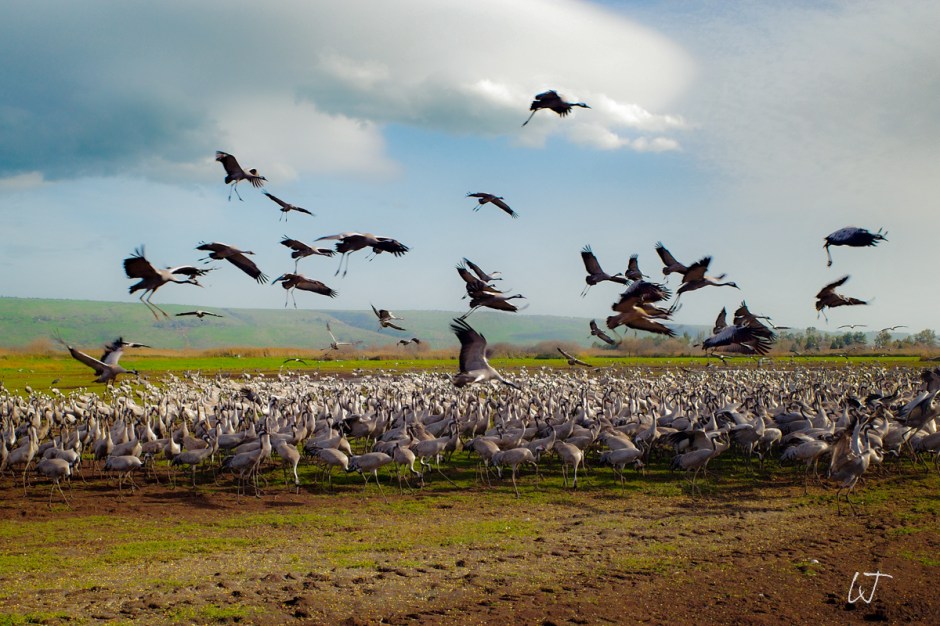
Throughout the fall migratory season, some 35,000 cranes arrive with their offspring in Israel’s Hula Valley from their Russian breeding grounds en route to Africa. At least half remain in the area during the cool, rainy winter months.
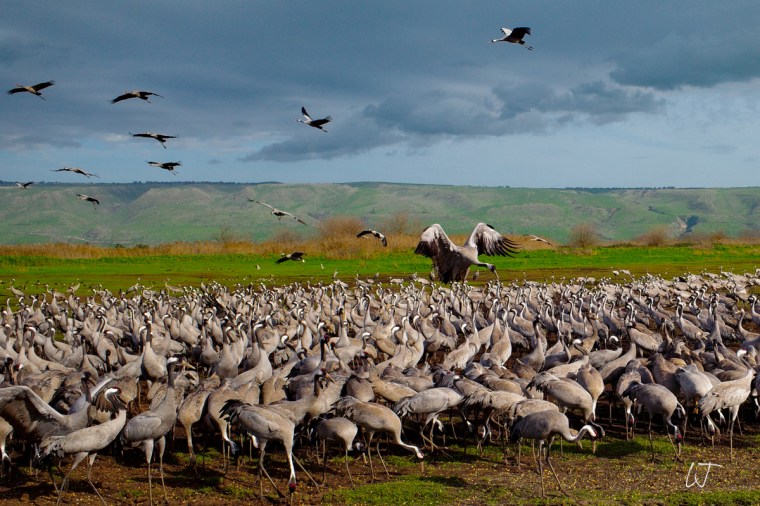
Part of the northern Great Rift Valley, lying between the Golan Heights and the Naftali mountains of the Upper Galilee, the nature site of the Hula Valley . During the recent war, the cranes still came and workers from the frontline communities continued their efforts under fire from Lebanon, organizing field hospitals for the birds and contending with severe wildfires.
[this post was prepared before the war with Iran began this week and Hezbollah rockets from Lebanon are once again threatening the safety and security of this Northern part of Israel]
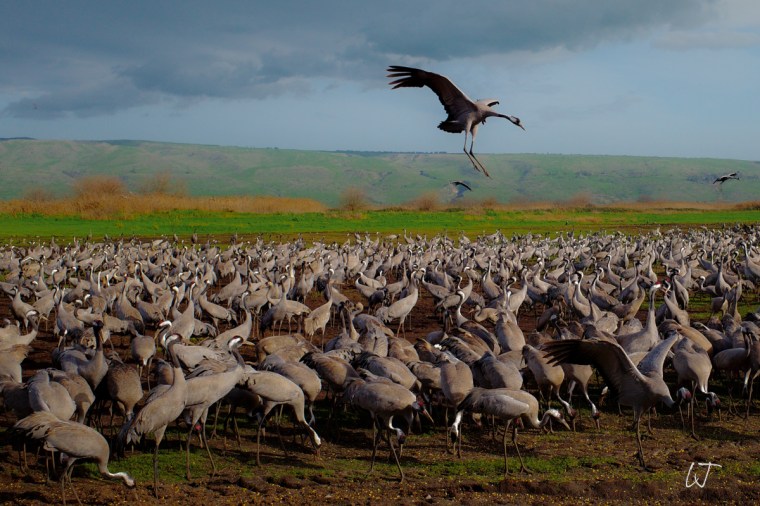
In addition to cranes, pelicans, storks and herons arrive at the valley, among many other species drawn to the abundant fresh water of marshland and Lake Hula. These areas were drained in the 1950s to prevent malarial mosquitos but a small section of the valley was later reflooded in an attempt to revive a nearly extinct ecosystem.
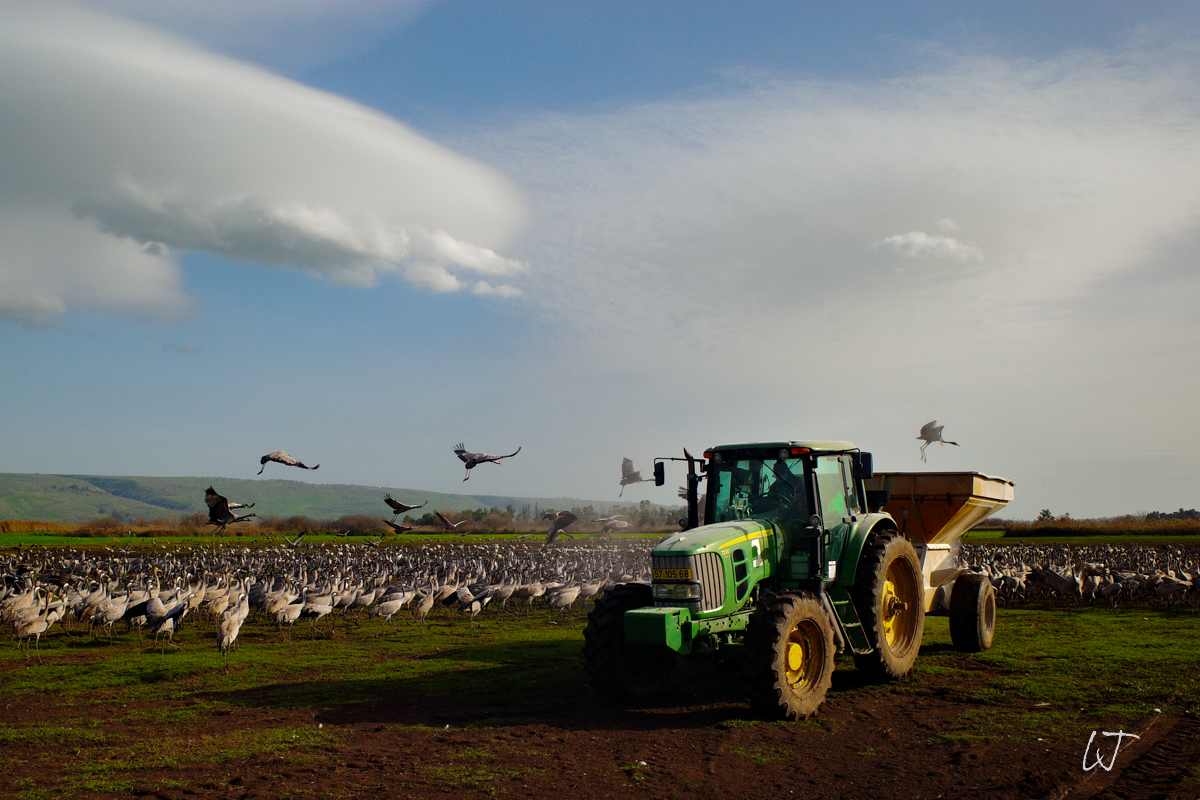
Since much of this fertile valley is farmed, conflicts of interest ensue hence the birds are fed in the designated nature reserve area in order to keep them off the farms.
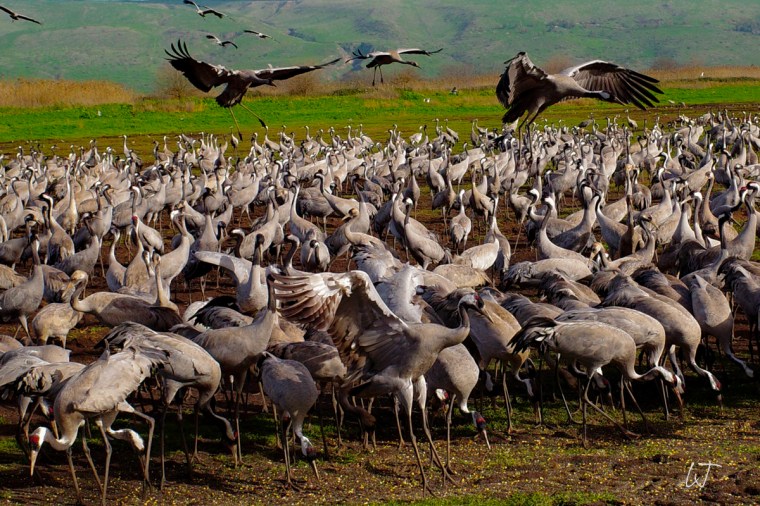
Too many massing together though creates health hazards with the risk of bird flu contagion amongst the vast flocks. Thus the feeding schedule months have had to be reduced.
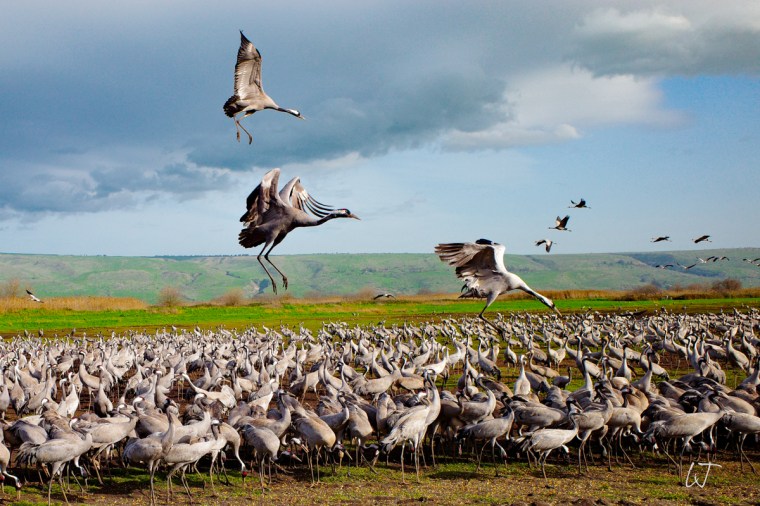
For Wildlife Wednesday and some few shots I was able to take with my pocketable Ricoh GRiii
 PoetryPix