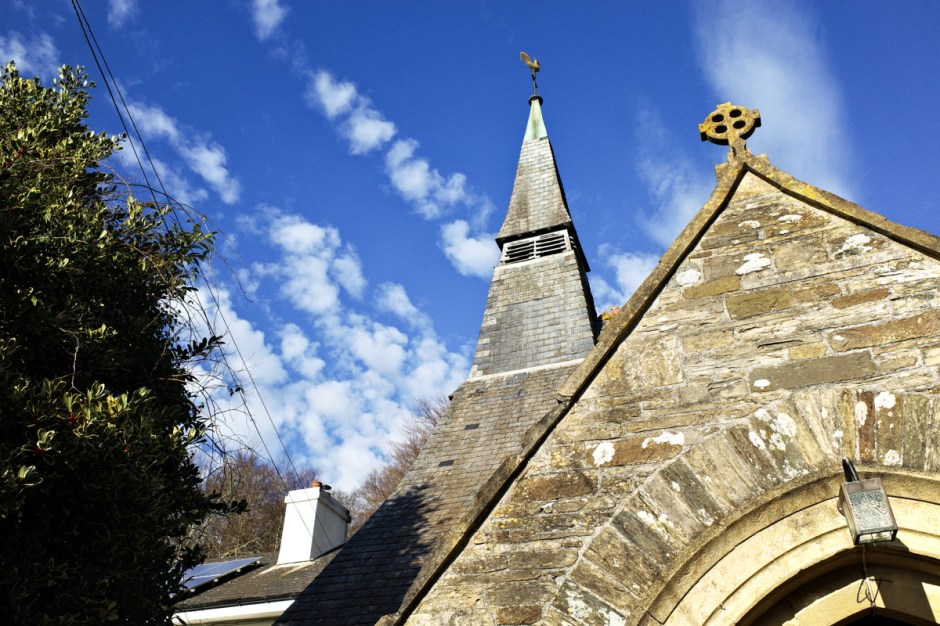
St Anne’s has had several manifestations as according to records, of 1539 there was a catholic chapel hereabouts, built in the 15th century:
” following the dissolution, it was sold for eight shillings sixpence…. As late as 1914 it was recorded that remains of the ‘ancient chapel’ were still visible in Hessenford Wood. [source]
It was not until 1832 that a new St Anne’s was built as a chapel-of-ease to to support the growing population of Hessenford. This new build did not meet requirements for long because by 1871 it was rebuilt of slatestone rubble with limestone dressings as the church we see today. With chancel, nave, aisles, a spire and only a small (bell-less) tower, weddings were thus proclaimed by shotgun.
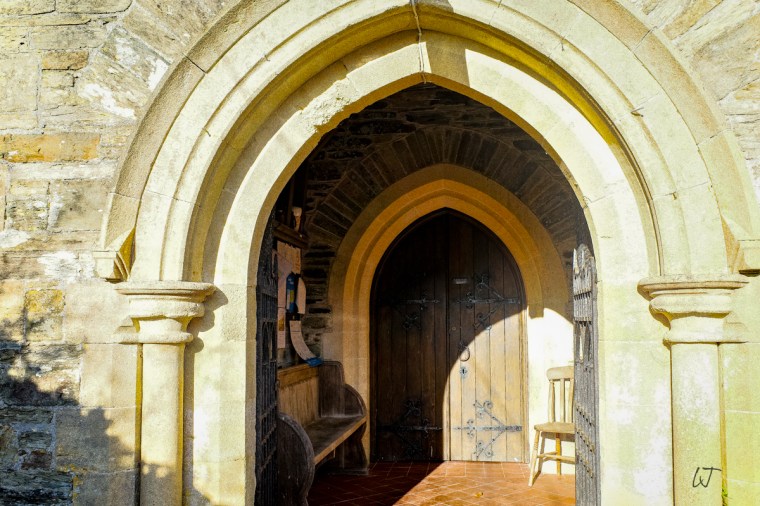
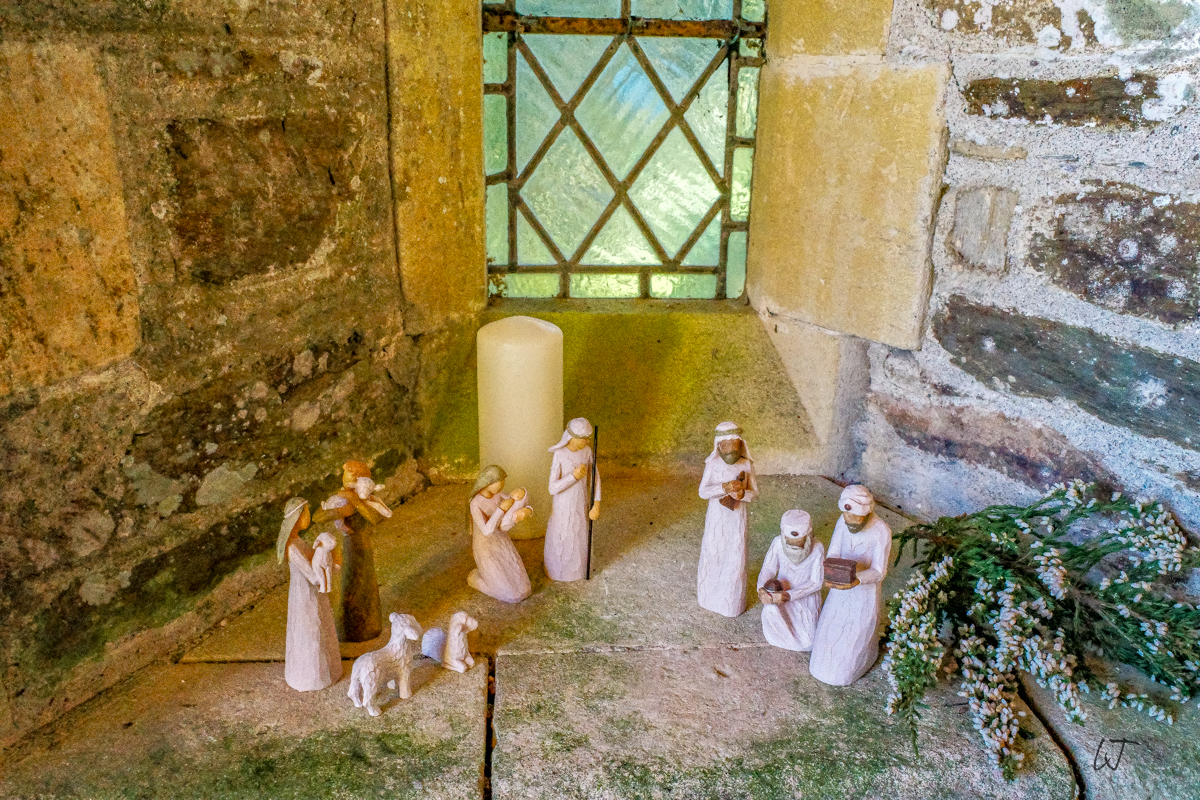
We visited just after Christmas on a dry sunny day after a light, early lunch at the Copley Arms where the car needs to be parked before the walk up to the church. The website stated that the church is always open and the sight of the ungated porch certainly seemed to confirm that though I have visited several churches where only the porch is accessible and has provided a welcome shelter and picnic site for walkers, or perhaps vagrants, in times gone by. But yes with a turn of the latch, the oak door of St Anne’s swung back revealing a very lovely interior.
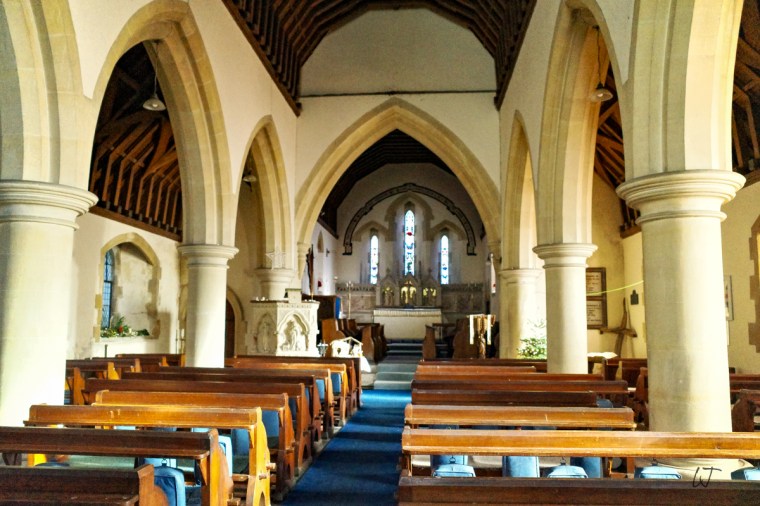
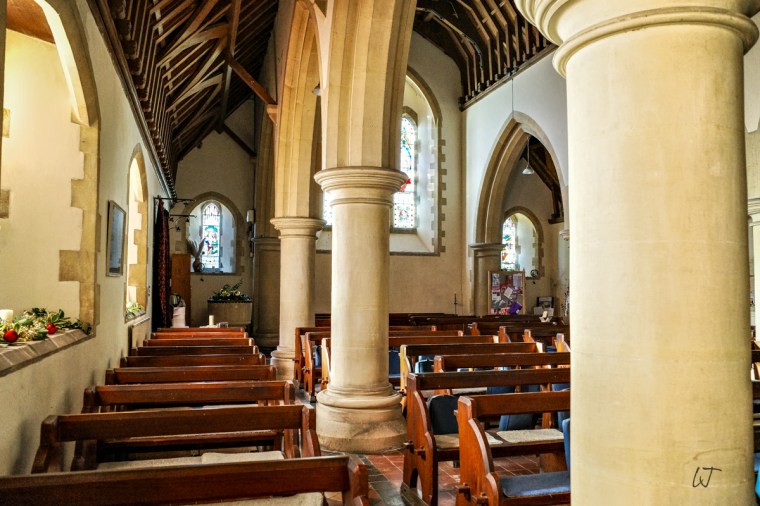
The smooth cream stonework and beautiful blue carpet throughout immediately brought to mind the vestments accorded to the daughter of St Anne, being none other than Mary, the mother of Jesus! As such the interior has a very feminine feel to it. It is set off by highly polished wooden pews and lit mostly by stained glass windows, except on the North wall which butts into the high-sided graveyard behind.
Aside from the main aisle the 2 side aisles are crammed with the pews giving the impression of a large congregation but since Hessenford is a small village and since St Anne’s has only one regular Sunday church service per month, it is somewhat surprising.
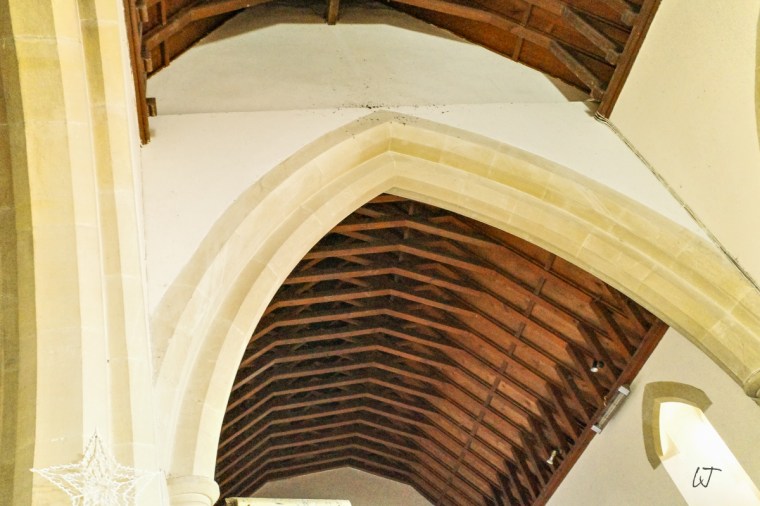
The fine barrel vaulted roof encompasses all the aisles and is a reminder that the church is built in the early English style . Since this is a parish place of worship, the architecture should ideally sit quietly within but the ornate chancel with its reredos and the Caen stone and marble pulpit felt intrusive.
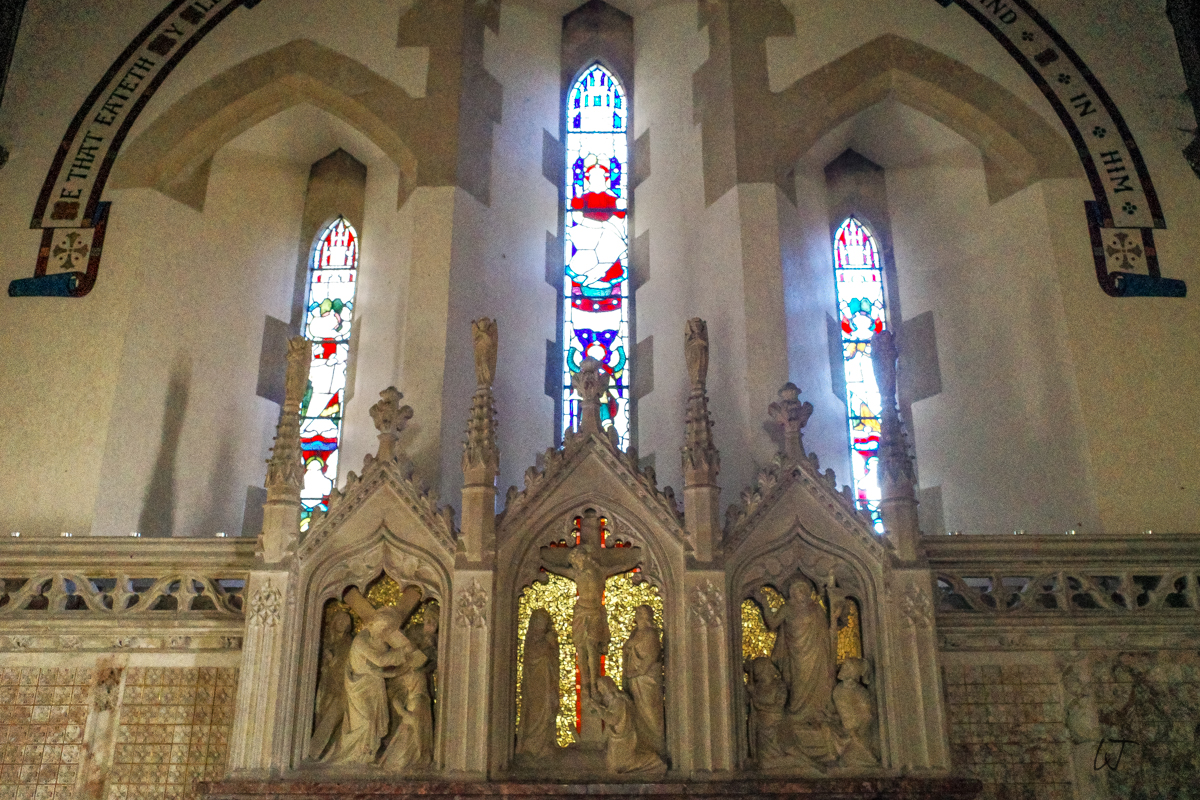
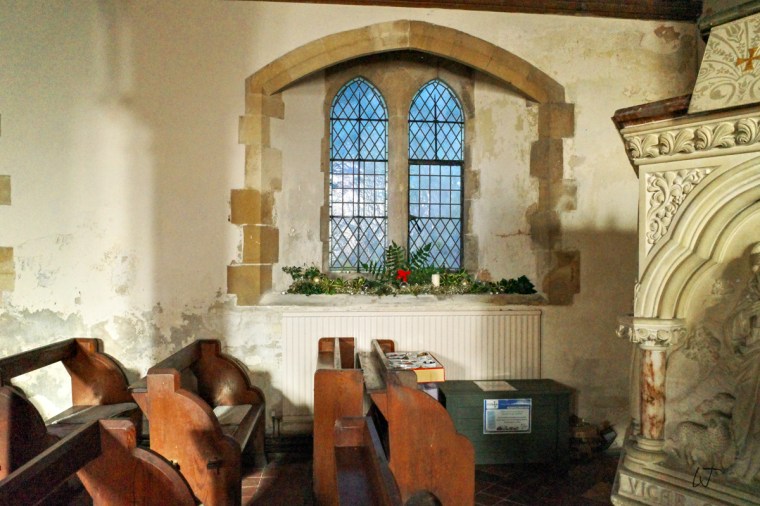
I searched amongst the figures on the stained glass windows for St Anne but found only St Anna the prophetess (see Luke 2 36:38) and this is not altogether surprising since Anne is mentioned only in the apocryphal book of James the Lesser, as being the mother of Mary, grandmother to Jesus and only recognised in Catholic and Eastern orthodoxy. Yet here in Protestant worship her name lives on, as one link to our Roman Christian history.
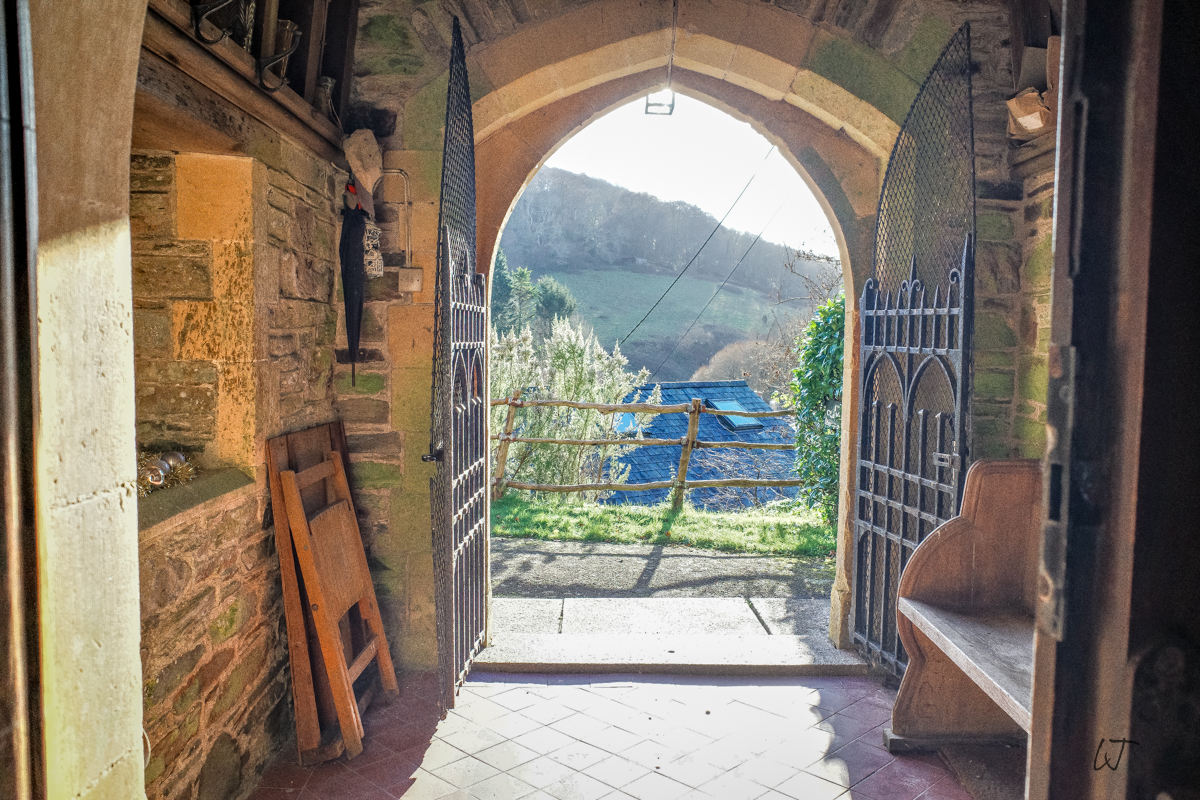
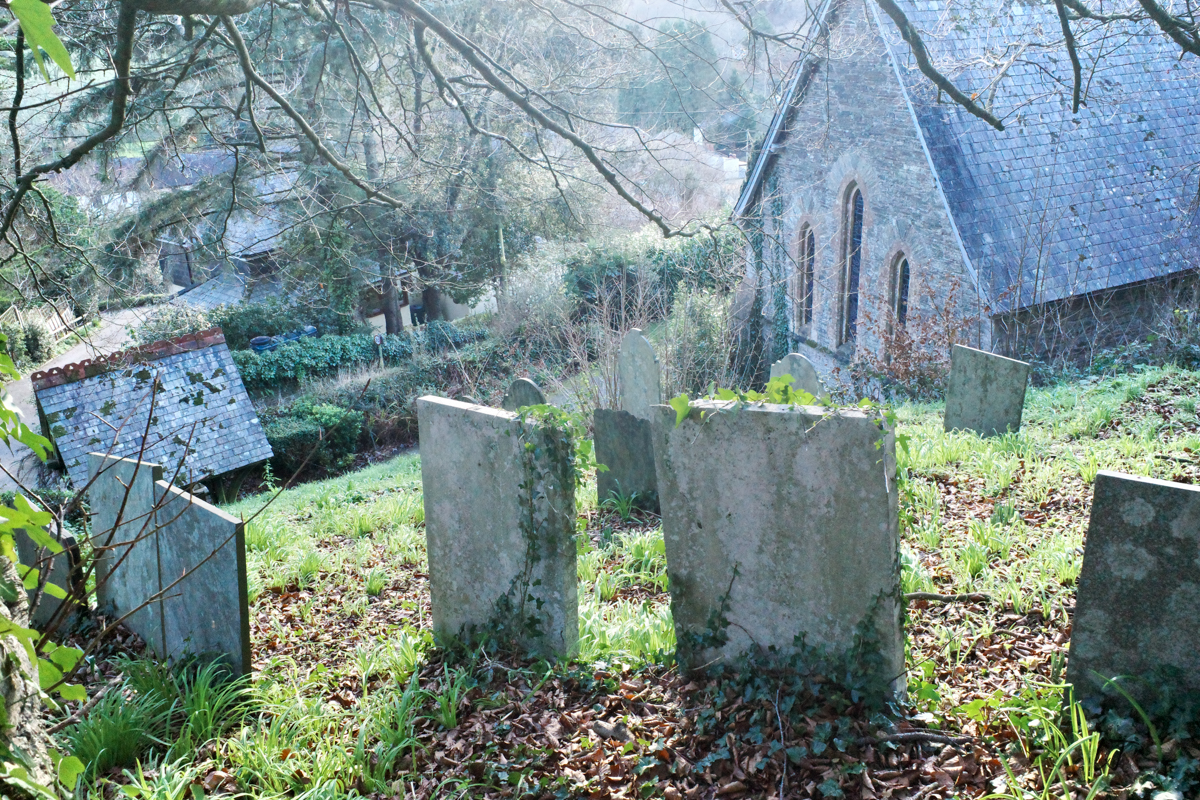
Leaving the church, the aspect of Hessenford’s valley places the church in a very scenic, contemplative setting and so too the adjacent, steeply inclined, woodland churchyard, though one can only sympathise with the burial party.
Sources
St Anne’s Hessenford
St Germans Group Parish
St Anne details –>
Non-biblical books from the early Christian centuries acknowledge Mary’s parents as Joachim and Anne. Made universal by Pope Gregory XIII, the church celebrates her feast day along with Joachim, on July 26th. St. Anne, Hebrew for Hannah, meaning “grace”, eventually became the patron saint of married women and childless couples
Opening the doors on Thursdays for some church crawling and I’m dedicating this post to my daughter Anne, a budding church crawler and sensitive soul
 PoetryPix