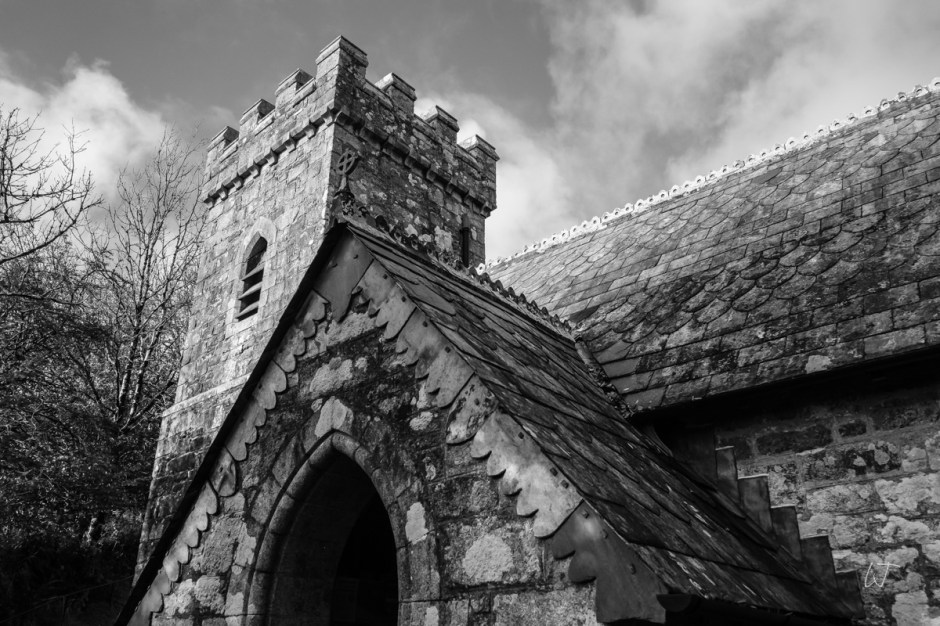
On the moorland of Bodmin, amidst much isolation of wind, grasses and sheep, a church dedicated to St Catherine of Alexandria was built here. It was in fact just one of the many Knights Templar churches scattered across our shires, located at a passing place on the pilgrimage route to the Holy Land via the harbour at Fowey, or even for those pilgrims heading west for St Michael's mount.
Bodmin Moor, known in their time as Temple Moor. A 19th-century guide described it as: “A desert heath… a howling wilderness… with the hamlet of Temple at its heart.” [source]

The Knights Templar were a wealthy organization and gained their foothold on Bodmin with the purchase of land on the Tregimore estate, to the north-east. Within this area in the hamlet of Temple the St Catherine chapel and hospice was built about 1210, providing shelter and spiritual support for travellers as well as for resident Templar members. The moors themselves were probably a training ground for young crusaders too.

The eventual dissolution of the Templars by Pope Clement V in the 14th century meant that the church and all its lands were handed to the Knights Hospitallers but then in the 16th century the Protestant Reformation confiscated or destroyed Catholic properties so that by the early 19th Century the church had become an oft misused, semi-abandoned ruin:
…services began to be held occasionally at the church from 1880 when the Reverend Edward Steel, Vicar of St Neots was appointed. By that time an ash tree had grown in the ruins estimated to have been about 60 years old. When being removed the roots were seen to have broken into a vault beneath and wrapped around a skeleton, these were left in place. [source]

By the saving grace of Victorian Britain's Restoration Movement, the church at Temple was included and having been approved by the Bishop of Truro. reconstruction began in 1882, Given that the granite walls and Tower were still in place, the architectural plans of Silvanus Trevail gave the building the exact same footings as the original Templar church. In 1883 work was completed and was rededicated to St Catherine with the original Norman font unearthed and a new bell forged.

The church is small and squat and looks as though it has has sunk deep into the moorland earth. The granite exterior and solid archway over the porch portrays a strong sense of resurrection from the history books but when entering through the church door, the visitor is met with a delightfully unexpected contrast...
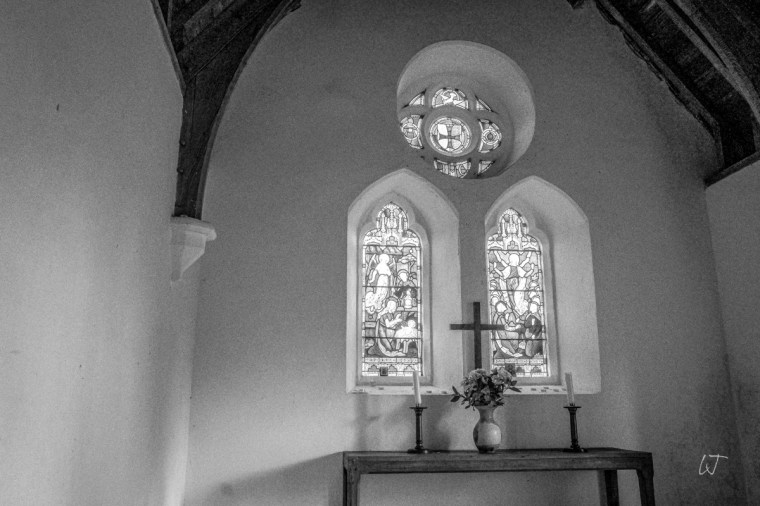
Light and airy, the interior is all white washed walls under a plain arch-braced roof. The unadorned altar is simplicity itself with the sole colourful décor shining through all the Victorian stained glass windows. Hints to the origins of the church, include the red cross pattée of the Templars in the east window and a depiction of a mounted knight in the north window of the church tower.

“A serious house on serious earth it is,
In whose blent air all our compulsions meet,
Are recognised, and robed as destinies.
And that much never can be obsolete”,
Larkin – Church Going
This isolated gem of a church remains off grid yet there is nothing musty or abandoned to the feel of St Catherine's. Services are held here every 4th Sunday of the month as well as the high holy days.
Details: St Catherine of Alexandria ->
She was a Christian martyr who lived in Egypt during the 4th century and is revered as the patron saint of soldiers . She is said to have inspired armies during the Crusades, a series of wars between Christians and Muslims for control of the Holy Land.
Opening the doors on Thursdays for some church crawling
 PoetryPix