
One side step off frenetic Fleet Street, ducking under the Jacobean town house and through the dark timbered gateway that leads to two Inns of Court – Middle and Inner Temple.
Both Middle and Inner Temple Inns were bombed during the war and while the area is often described as a portal to a bygone age, much of what you see is reconstructed. Middle Temple lost 122 of its 285 sets of chambers.
Londonist
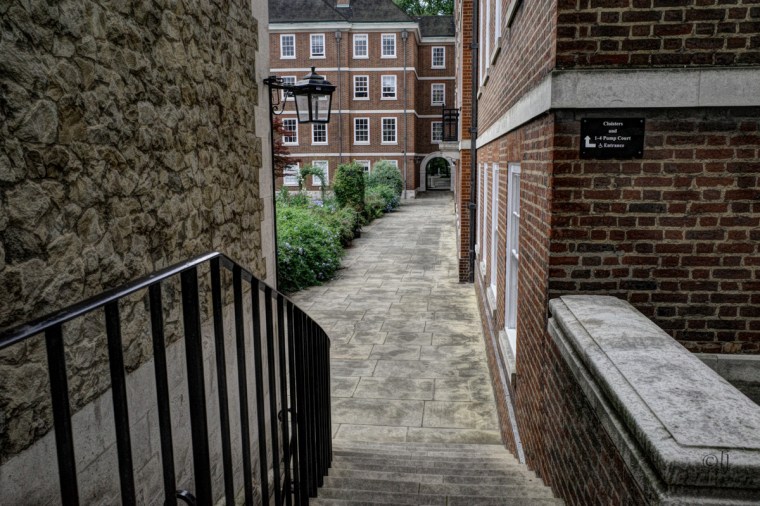
Suddenly there are hushed tones everywhere – a maze of narrow passageways, niched gardens, historic buildings, Medieval halls, tombs of the great and the good, and at the heart, the Templar Church.

I visited here often when living in Central London and still make a pilgrimage whenever I can. But only just recently have I managed to photograph the church how I’ve always wanted to. Built by the Knights Templar in the 12th century as a round church, a duplication of the domed church of the Holy Sepulchre in Jerusalem – a sort of home from home for the military Crusaders when back in England.
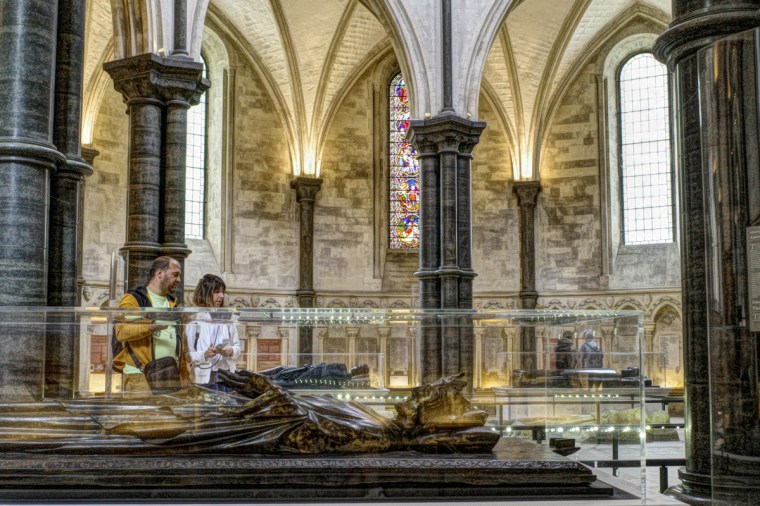
And some are buried here, their effigies lying prostate still in armour, long knightly sword by their sides, including William Marshal, 1st earl of Pembroke (1147–1219): “magnificent warrior, supreme in tournaments and battles alike, but a paragon of the key chivalric virtues of prowess, largesse and unfailing loyalty”. [source]

Built on the south side of the round church in 1240 is the chancel or Hall Church. Despite the many visitors who are drawn to its outstanding history as well as the magnificent stained glass windows, grand organ and altarpiece, it is still very much a place of regular Christian worship.
But this was not the first Templar church. Somewhere in Holborn, around the area of Lincolns Inn the Templars first set up their headquarters. Their growing numbers and amassing wealth led to a need for larger quarters near the river Thames so I like to come here and take an even further step back in time to the Templars.

 PoetryPix